


DALLAS — Principal Cassell Gray still remembers the first question a parent asked him when he arrived at the Young Men’s Leadership Academy at Fred F. Florence Middle School: “Are you going to stay?”
It wasn’t a casual icebreaker.
It was a reflection of what the school community had endured. There had been years of instability, declining enrollment, and a D rating in 2025 that led to lowered expectations. When Gray stepped onto campus last year, he walked into a building that needed more than policies and programs. It needed belief.
Under his leadership, that belief in the school’s and the students’ potential became a reality. Young Men’s Leadership Academy climbed from a D to a B rating. Gray is proud of that letter, but he’s careful not to let it define the story.
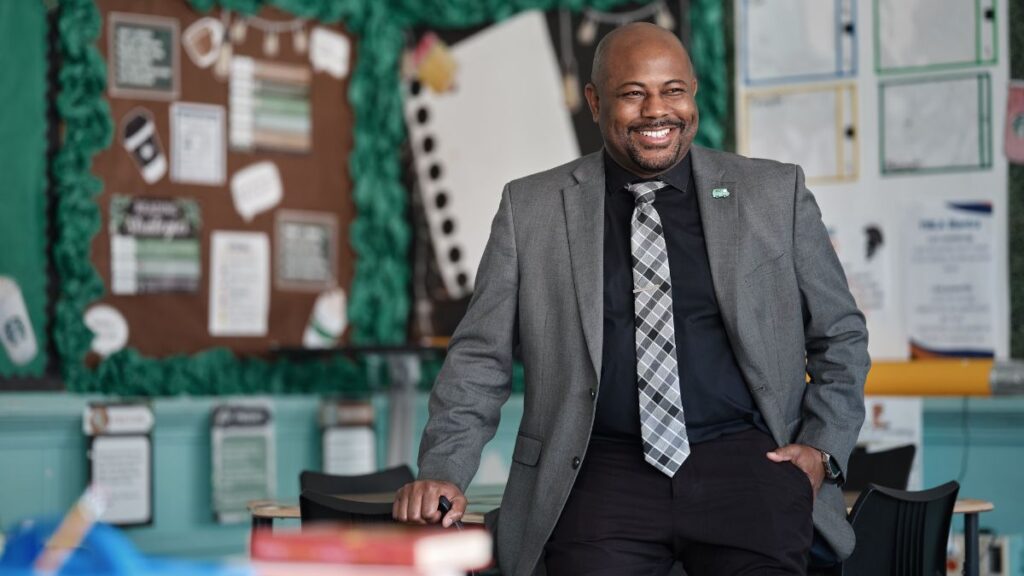
“I love the fact that we’re a B-rated school now, but for us here, it’s more so about making sure kids recognize within themselves they did the best they could to their ability, and they’re celebrated for that,” he said.
For him, the real turnaround began when the adults in the building raised their expectations — not of test scores, but of themselves and their students. From the start, he made it clear that if the adults demanded excellence and modeled it, the boys would rise to meet it.
That conviction showed up in his non-negotiables. Instructional quality wasn’t left to chance. Teachers rehearsed lessons before they ever delivered them to students. Gray didn’t want the first draft of a lesson unfolding live in front of a classroom. Planning became sharper, questioning became more intentional, and classrooms grew more focused.
At the same time, every student became more than a name on a roster. Gray introduced a “data passport” that each boy carried throughout the year. Inside, teachers recorded whether students met or beat their weekly academic goals. These weren’t dusty binders or spreadsheets only adults saw; students could literally hold their progress in their hands.
“Our community sends their best and their brightest to us every day, and we have to treat their best investment, which is their kids, with that ultimate care,” he said. “If I got a student that isn’t necessarily where they need to be academically, what is it that we’re doing to make sure that we’re moving them to the next step?”
The data passports turned hallway run-ins into impromptu data conferences. If Gray or an assistant principal asked to see one, it wasn’t to shame a student. It was to talk about what worked, what didn’t, and then how to adjust. Over time, the language on campus shifted. Boys began seeking him out with a quiet pride.
“The best feeling all year was when students would come up to me after taking an assessment on a Thursday or Friday and say, ‘Mr. Gray, check me out, I beat my goal,’” Gray said. “It became a culture of excellence here because they saw that it was being celebrated.”
That growing sense of agency is, in Gray’s view, the essence of the work. He doesn’t want the boys to succeed only under watchful adult eyes. He wants them to leave with the internal belief and habits to pursue excellence anywhere.
This mindset also shaped how he approached culture and discipline. Gray is firm, but he refuses to hold grudges against kids. If a student has a rough day and ends up in his office for a difficult conversation, the next morning starts fresh—with a fist bump in the hallway, not a cold shoulder. Over time, students began to understand that consequences came from a place of care, not anger.
“I think these boys know I care for them,” Gray said. “Even when I have to discipline them, they know it’s coming from a spirit of love.”
Physical routines on campus quietly reinforced that message. Something as simple as walking on the right side of the hallway or keeping shirts tucked in wasn’t about control. Gray used them as life lessons: order over chaos, pride over indifference, preparation over passivity. When students look sharp and move with purpose, he believes, it’s easier for them to see themselves as capable of excellence.
Inside classrooms, Gray pushed for student voices to carry the learning. Through structured discussion routines, he ensured that boys were talking through ideas, not just listening passively. He expects to hear students more than teachers because participation builds confidence, and confidence fuels achievement.
Families, too, have felt the difference. Weekly Sunday evening newsletters keep them informed about the coming week. Regular parent meetings and consistent communication have rebuilt trust. Parents now see a school that not only expects more of their sons, but also invites them to be partners in that work.
“Parents want to help. They just need to know how they can help,” Gray said. “When you talk to parents and you let them know what we need here at school, one thing our parents will do is they will give us what we need.”
For Gray, the B rating is validation, not a finish line. He is already starting successful practices earlier in the year and refusing to let the campus slip backward. If he talks about legacy at all, it’s in terms of the young men he serves. “We’re not going to stop. Yes, we’re a B-rated campus, but we’re not done yet,” he said. “We’re not going to stop until every student is at or above grade level


