


Chronic condition a leading cause of pediatric hospital admissions
Asthma is a common condition that affects how children breathe, causing swelling and narrowing of the airways. When symptoms worsen, it can lead to an asthma attack, which can range from mild to life-threatening.
This World Asthma Day, Parkland Health is raising awareness and connecting families to care that helps children manage asthma and stay healthy.
“Asthma is a chronic condition that affects how children breathe, and symptoms can range from mild to severe. Increasing awareness helps families recognize early warning signs and seek care sooner, which can prevent complications and reduce the risk of serious asthma attacks,” said Cesar Termulo, MD, Associate Medical Director for Parkland’s Community Health Centers.
Common asthma symptoms in children include wheezing, shortness of breath, frequent coughing (especially at night) and chest tightness. While asthma cannot be cured, it can be controlled with the right treatment and daily management.
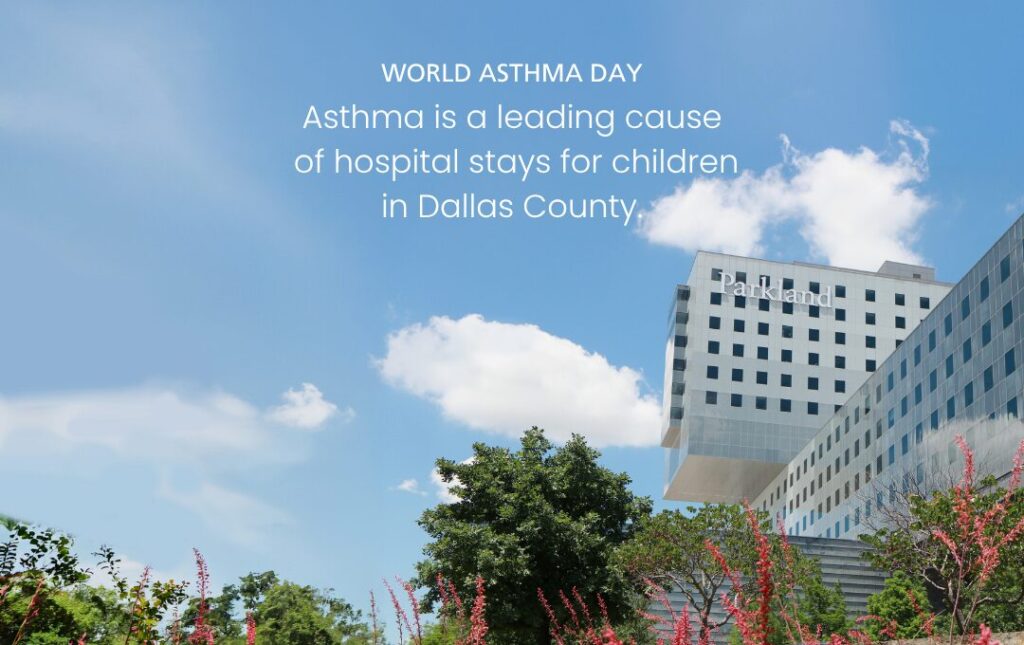
Asthma continues to impact children across our community. According to the 2025 Dallas County Community Health Needs Assessment, pediatric asthma is among the top five causes of hospital admissions for children.
“Asthma remains a significant concern for children in Dallas County, highlighting the need for consistent management, early recognition of symptoms, and access to care,” Dr. Termulo said.
Parkland offers care and resources to help families manage asthma, including community health centers across Dallas County, access to medications and care teams, and support from community health workers. Families can also enroll in Parkland’s asthma text message program for reminders, education and tips. To sign up, text @asthma to 844-721-0839.
“With the right treatment plan and ongoing support, most children with asthma can control their symptoms and live active, healthy lives,” Dr. Termulo said. “At Parkland, we focus on partnering with families to provide education, medications and tools that help them manage asthma day to day.”
To learn more about signs, symptoms and treatment options for children, visit www.parklandhealth.org/asthma-in-children.
For more information about Parkland services, visit www.parklandhealth.org.


